Weighing the options: Private foundation or donor-advised fund?

When you’re working on the charitable components of a client’s estate or financial plan, one of the first areas you’ll likely explore is the structure. Certainly you are familiar with both private foundations and donor-advised funds as useful charitable giving tools. Before you jump into one or the other for a particular client, though, it’s important to review the similarities and differences between the two so that you can best achieve your client’s goals. 

To help you evaluate a client’s options, here are three common myths about the differences between private foundations and donor-advised funds.

Myth #1: Donor-advised funds are all the same and only private foundations can be customized

Private foundations will always differ from donor-advised funds in important ways, not only because of their status as separate legal entities and the deductibility rules for gifts to these entities, but also because of the opportunities to customize governance. But it is a mistake to assume that a donor-advised fund is a cookie-cutter vehicle. Indeed, “donor-advised fund” is simply a term used to describe the structure of a fund and its relationship with a sponsoring organization such as a community foundation. The donor-advised fund vehicle itself is extremely flexible. Here’s why:

–Donor-advised funds are popular because they allow your client to make a tax-deductible transfer of cash or marketable securities that is immediately eligible for a charitable deduction. Then, your client can recommend gifts to favorite charities from the fund when the time is right. 

–A donor-advised fund at the community foundation is frequently a more effective choice than a donor-advised fund offered through a financial institution. At a community foundation, your client is part of a community of giving and has opportunities to collaborate with other donors who share similar interests. Plus, the community foundation is itself local and is deeply knowledgeable about the needs of our region and the nonprofits meeting those needs. 

–The community foundation can work with you and your client to build a charitable giving plan that extends for multiple future generations. That is because the team at the community foundation supports your clients in strategic grant making, family philanthropy, and opportunities to learn about local issues and nonprofits making a difference. 

Myth #2: Deciding whether to establish a donor-advised fund or a private foundation mostly depends on size

The size of a donor-advised fund, like the size of a private foundation, is unlimited. The United States’ largest private foundations are valued well into the billions of dollars. Information about private foundations, ironically, is not so private. The Internal Revenue Service provides public access to private foundations’ Form 990 tax returns. That is not the case for individual donor-advised funds.

Similarly, donor-advised funds are not subject to an upper limit. Although information on the asset size of individual donor-advised funds is not publicly available, anecdotal information indicates that some donor-advised funds’ assets may total in the billions of dollars.

Indeed, a donor-advised fund of any size can be an effective alternative to a private foundation, thanks to fewer expenses to establish and maintain, maximum tax benefits (higher deductibility limitations and fair market valuation for contributing hard-to-value assets), no excise taxes, and confidentiality (including the ability to grant anonymously to charities).

The net-net here is that the decision of whether to establish a donor-advised fund or a private foundation–or both–is much less a function of size than it is other factors that are tied more closely to the objectives a client is trying to achieve. 

Myth #3: Donor-advised funds and private foundations are mutually exclusive

Make sure you’re aware of the benefits of using both a donor-advised fund and a private foundation to accomplish clients’ charitable goals. For example:

–Donor-advised funds can help meet the need for anonymity in certain grants, which is typically difficult using a private foundation on its own.

–A donor-advised fund can receive a client’s gifts of highly-appreciated, nonmarketable assets such as closely-held stock and real estate, and benefit from favorable tax deduction rules not available for gifts to a private foundation.

–An integrated donor-advised fund and private foundation approach can help a client balance and diversify investment and distribution strategies to ensure that giving to important causes remains steady even in market downturns.

Some private foundations are even considering transferring their assets to a donor-advised fund at the community foundation to carry on the foundation’s mission. Terminating a private foundation and consolidating giving through a donor-advised fund is sometimes the best alternative for a client when the day-to-day management and administration of the private foundation has become more time-consuming than expected and is taking time and focus away from nonprofits, the community, and making grants. 

Along these lines, some families find that the tax rules related to investments, distributions, and “self-dealing” have become harder to navigate and are perhaps even preventing the family from maximizing tax benefits of charitable giving. Finally, the administrative load of managing a private foundation sometimes becomes overwhelming, especially if the family members who handled these functions initially have retired, passed away, or simply become busy with other projects.

The bottom line here is that we encourage you to reach out to the team at the community foundation any time you are evaluating how to structure a charitable giving plan to achieve both your client’s charitable goals and financial goals. Our team is here to help. In many cases, the community foundation’s tools and services are a great fit for your client’s needs. If not, we will point you in the right direction.
Area NPOs report disruption, uncertainty around federal funding freeze

Twenty-one area organizations reported a range of effects from last month’s funding freeze, with a few respondents projected debilitating revenue losses of up to 85 percent.

The data came from a survey sent to 150 area nonprofit leaders by The Community Foundation of Harrisonburg and Rockingham.

Seventeen organizations reported some reduction in services related to the freeze.

“Even as we acknowledge that this situation is fluid and changing day by day, the information provides early indicators about the larger impacts of the federal funding freeze,” said Revlan Hill, executive director. “Some organizations still don’t know the full effect.”

Hill was interviewed by WHSV TV-3 and WSVA Radio about the survey results, as well as about what she was hearing from area nonprofit leaders in the immediate aftermath of the cuts.

Watch the WHSV TV-3 interview.

Listen to the radio show.

TCFHR did not gain permission to publicly share specifics related to responding organizations, but staff did reach back out when an opportunity arose to meet with city and county officials. “We chose to speak in generalities unless we had permission to give more specifics,” Hill said.

In Summary

Some takeaways from the survey:

—Many organizations reported needing to decrease their services because of reductions in staffing, at the same time as they were seeing an increase in the need for services from new and established clients.

—Reductions in funding, realized or anticipated, were also leading to higher barriers to entry for clients; for example, benefits like free materials or free/lower processing fees were at risk.

—At least one organization reported losing one full-time staff member, while others anticipated the need to substantially reduce staffing. At least two organizations anticipated needing to shut down operations because of the loss of staffing.

—Concerns about staff wellbeing, stability and commitment are real, said one respondent whose team will face an “overwhelming backlog” if funding does resume.

“These kind of disruptions also lead to low morale and anxiety, along with an increased or even new workload,” Hill said. “The nonprofit world has always been a challenging space to work in, and staff deeply care about providing the best services to those they are serving. I can imagine many people are more anxious and concerned in their day-to-day work right now.”

—Interrupted or unstable funding can also mean the loss of several years of research, partnership, and collaboration, said one respondent, naming that the third year of a five-year initiative would be funded but not the final two years.

—Some organizations are leaning on already established partnerships or collaborations to synergize services – an innovative and positive problem-solving step, but one that takes time and energy. On the other hand, the sapping of resources and energy curtails strategic planning and reinforces the “hunker-down” mentality.

What’s Next?

TCFHR has used survey information to inform inquiring donors looking to prioritize local charities in need. Another stakeholder survey may be in order to continue to track effects, Hill said, as well as better quantify the effects of federal dollars on Shenandoah Valley communities.

TCHFR’s annual grant cycle opens July 1, and grantmaking strategies will invariably include discussion about affects on applying organizations.

With the April 16 Great Community Give just around the corner, publicity efforts for this major online giving day have intensified.

Last year’s event helped raise $2.2 million dollars. While the giving landscape may have shifted with so many organizations in need, there’s a new urgency to this year’s event, Hill said. “Contributions are always important to a nonprofit organization but they almost seem like they’re more important right now. We hope Great Community Give attracts even more donors this year.”


Eighth annual Great Community Give set to surpass historic giving mark

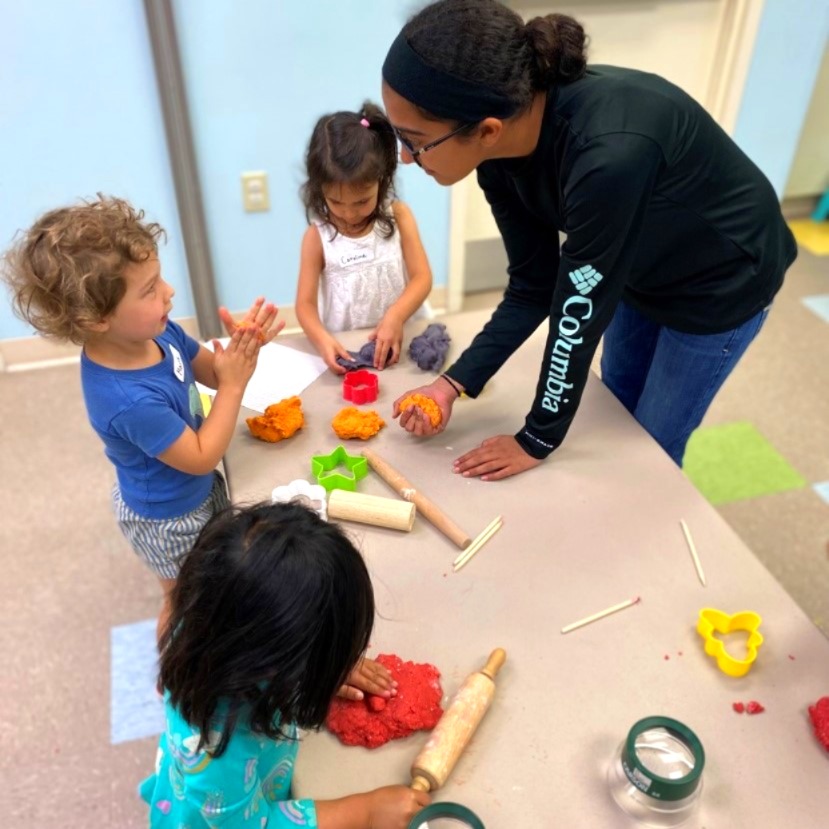
Great Community Give helped the Explore More Discovery Museum fund a summer teen internship program. (Courtesy photo)

Approximately 149 nonprofits serving Harrisonburg and Rockingham County will participate in the eighth annual Great Community Give on Wednesday, April 16, 2025. The online giving day, hosted by The Community Foundation of Harrisonburg and Rockingham (TCFHR), has raised more than $9.2 million since the first year.

If this year’s giving follows past patterns, the $10 million mark will be reached by 10 a.m.

“When The Community Foundation started this event eight years ago, we never dreamed that our community would raise $10 million dollars for area nonprofits,” said Revlan Hill, executive director. “Our thanks go out to our wonderful team of sponsors, volunteers, and of course, the donors who come back every year to make this event so successful.”

Goals for this year include raising $2 million and increasing the number of donors.

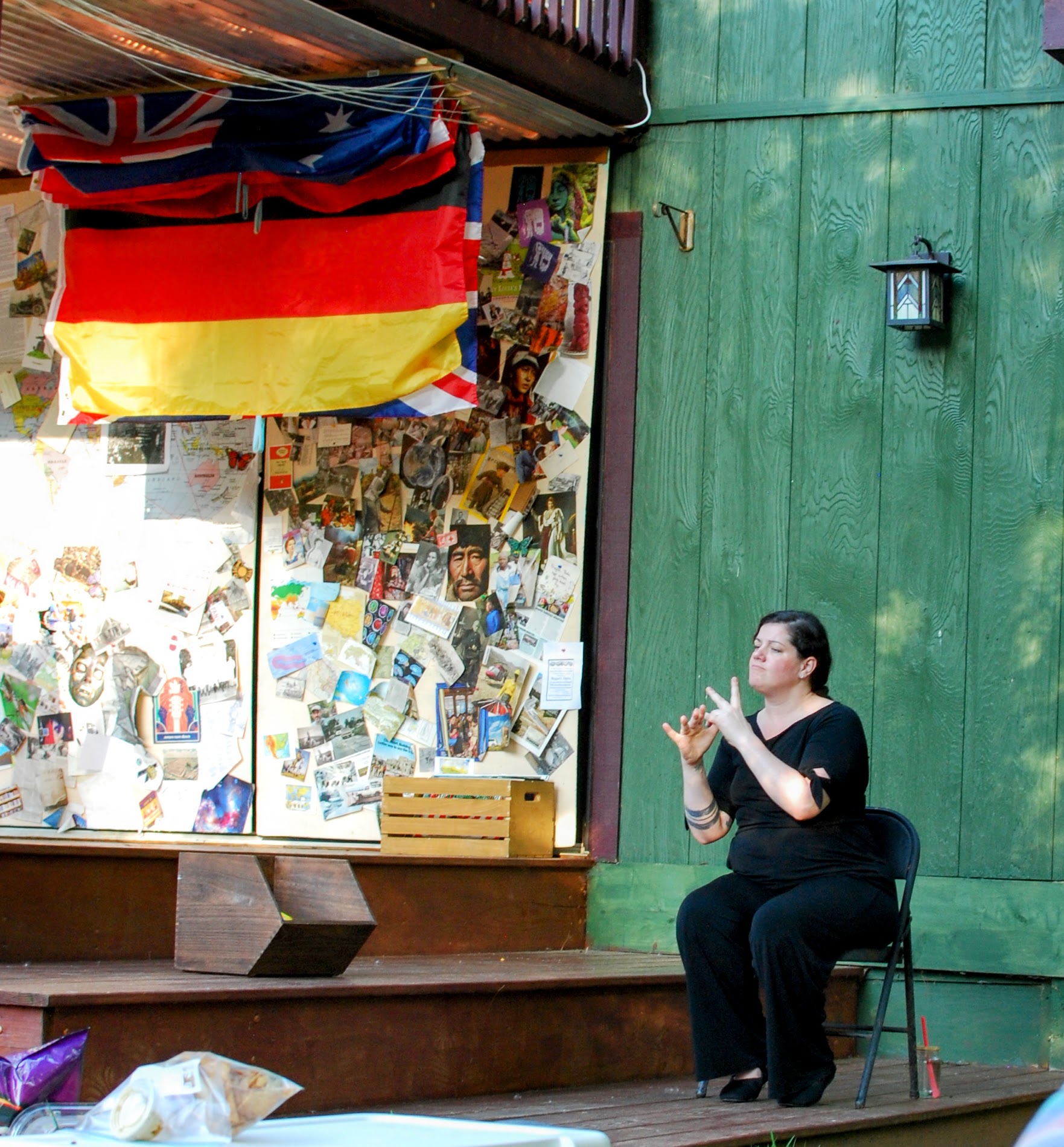
Silk Moth Stage used Great Community Give funding to increase audience accessibility. Their innovative efforts have offered a model to other theater groups. Interpreter Melissa Black (right) signs next the stage during a performance of “Underneath the Lintel” in May 2024 at Silk Moth Stage in Bridgewater. (Courtesy photo)

“Last year’s total of $2.2 million was raised with the help of more than 7,600 donors, and we’d love to surpass both of those numbers,” said Lauren Jefferson, director of programs and marketing at TCFHR. “We’d also love to grow our reach to people that may not know about the event and are giving for the first time. For each of the past two years, we’ve had about 2,200 donors who are totally new to the event and have never donated before. It would be fun to see that number rise!”

Giving is as easy as visiting www.greatcommunitygive.org, searching for an organization or a cause to support, and putting a donation into a virtual cart. Donors can support multiple organizations efficiently.

“Supporting our local nonprofits and the valuable services they offer our community members is more important than ever,” Jefferson said. “We encourage donors to help us spread the word about this event and join in a really unique day that celebrates all the hard work being done to make our community a better, healthier place.”

Generous sponsors contribute to a prize pool of approximately $76,000, all of which goes back to the nonprofits through hourly contests and random drawings.

The day kicks off at 6 a.m. and ends at 8 p.m. Giving isn’t limited to just one day: Donors can also give cash or checks directly to the nonprofits from April 2-15.

Here’s how last year’s donations helped four organizations:

  • Explore More Discovery Museum funded updates to their creative studio workshop, their teen internship program, Career Saturdays with area professionals, and preschool programs.
  • Village to Village hosted a week-long free camp for more than 60 refugee students  who built relationships through workshops, games and meals with 50 community volunteers.
  • Silk Moth Stage, a theater that has pioneered accessibility in Virginia, used some of the donation from Great Community Give to provide American Sign Language interpretation at several

    Village to Village used GCG funding to fund a summer camp for refugee children. (Courtesy photo)

    performances. “Other theaters have reached out to me for advice about adding ASL and other accessibility practices since they saw how positive it was for Silk Moth Stage,” said Aili Huber, artistic director.

  • Still Meadows Enrichment Center and Camp, a therapeutic riding center and outdoor facility, used the funds from GCG to maintain railings on the accessible treehouse; purchase day camp supplies; and expand their riding activities with new equipment.


JMU three-pointers score a donation from Lantz Construction to the Imagination Library

Lantz Construction representatives join staff from Massanutten Regional Library  and The Community Foundation of Harrisonburg and Rockingham (TCFHR) at the Feb. 28 James Madison University women’s basketball game. From left: Cynthia Prieto, TCFHR board member; Jeff Deavers, chief preconstruction officer for Lantz Construction; Lauren Jefferson, director of programs and marketing at TCFHR; Zach Elder, director of Massanutten Regional Libraries; and Arianna Williams, director of communications and marketing at Lantz.

Every time James Madison University women’s basketball players hit a three-point shot this season, they scored some cash to support literacy initiatives. Carrying on a strong tradition of coporate philanthropy, Lantz Construction partnered with JMU Athletics this winter for a charitable campaign to promote early childhood literacy and development.

The donation of $1,000 benefitted Massanutten Regional Library and the local branch of Dolly Parton’s Imagination Library, a monthly book gifting program that is free for all children under the age of five in Harrisonburg and Rockingham County. The program, which is operated in a partnership between The Community Foundation of Harrisonburg and Rockingham and The Dollywood Foundation, serves more than 3,300 children in the area.

A state bill aids in 50 percent of the cost, but the other half, about $7,000, is covered each month by TCFHR. Funds come from donations such as that given generously by Lantz, as well as limited grant funding from Rockingham County and other sources.

“To keep Dolly’s dream of books for children alive in our area, we depend on generous citizens and businesses who want to support literacy initiatives,” said Lauren Jefferson, who heads the Dolly program at TCFHR. “These funds enable us to continue reaching babies and toddlers in families that might not be able to afford a new book each month. We’re grateful to Lantz Construction for their contribution to this worthy cause and for their investment in the future of our little readers.”

Lantz Construction Company is a “Class A” general contractor licensed in Virginia and West Virginia specializing in commercial design-build construction.


TCF opens scholarship applications, with almost $1 million in funding available

From left: Vincent Tran (Virginia Tech), Kerrigan Bauserman (North Carolina State), and Ashlyn Smiley (Mary Baldwin University) were among the local recipients of scholarships to fund their studies in fall 2024. The Community Foundation of Harrisonburg and Rockingham offers nearly $1 million in funding to area students in vocational and academic programs each year.

Students seeking funding to pursue academic or vocational studies in fall 2025 can now apply for scholarship opportunities with The Community Foundation of Harrisonburg and Rockingham (TCFHR).

Nearly $1 million in funding is available, with additional funds for vocational studies available through the VAReady program.

The application cycle closes April 24.

Learn more about all scholarships.

Apply for a scholarship.

Awards range from $500 to $10,000. Approximately 80 committee members determine the awardees, which are announced in the late spring.

TCFHR’s website includes more information and eligibility criteria about the 26 scholarships offered. Adult students and high school students from most counties in the Shenandoah Valley and many adjoining areas are eligible to apply.

“Not all of the 26 scholarship funds are for Harrisonburg and Rockingham County students. We work with donors who want to support students up and down the Shenandoah Valley,” said Senior Director of Scholarships and Grants Ann Siciliano. “We encourage students, parents and guidance counselors to visit our website and take a look at what is offered, including some new opportunities this year.”

Scholarships offer general support to those pursuing trade skills, professional certifications, and general academic studies, as well as to those pursuing specific academic fields, such as music, kinesiology, education, and agriculture.

Some scholarships are limited to applicants from specific high schools. Others support students who want to pursue their education in a certain vocation or career path.

Siciliano urges students and parents to spend a few minutes reading about the scholarships. “I think people will be surprised about the number of opportunities,” she said. “Donors come to us with connections to geographic areas or certain high schools or fields of study and we work with them to help meet their philanthropic goals.”

About half of the scholarships funded by donors commemorate or memorialize a family member. The newest scholarship remembers Captain Anderson “Andy” King and is open to graduating seniors from public high schools in a 13-county area who will pursue agricultural studies.

The Mark Price and Kimberly Jo Price Lapsley Memorial Scholarship is also new this year and celebrates the lives of these two graduates of Turner Ashby High School by supporting fellow TA grads pursuing vocational education.

Introducing new board members Casey Armstrong, Becca Miller and Sarah Von Schuch

Photos by Jon Styer,  At Ease: Design & Consulting

Three new members have joined the Board of Directors of The Community Foundation of Harrisonburg and Rockingham.

“At our November board meeting, we welcomed Casey Armstrong, Becca Miller and Sarah Von Schuch,” said Revlan Hill, executive director. “All three bring knowledge of the foundation and its broader mission, as well as expertise and networks that benefit our ongoing work. We’re glad to have them aboard!”

TCF’s board of 16 is comprised of professionals from a range of backgrounds. To view all board members, click here.

Casey Armstrong

Casey Armstrong serves as Rockingham County’s administrator, a role he’s held since January 2025. He entered county employment in 2006 as an environmental inspector. In 2012, he became director of community development and in 2016, assistant county administrator for economic development. In this role, he supervised community development, economic development, parks and recreation, and engineering departments.

Casey is a 2006 graduate of Eastern Mennonite University with a degree in environmental science. The Gainesville, Virginia, native lives with his family in Rockingham County.

Becca Miller

Becca Miller owns the local Domino’s franchise, which includes 18 stores in the Shenandoah Valley, Charlottesville, and central Virginia. For the past four years, she and her team have earned the company’s prestigious Gold Franny Award, earned by only the top 2 percent of franchisees around the world, in recognition of operational excellence, team member morale and community involvement.

Becca and Domino’s have been involved with the Great Community Give since its first year. “Seeing the power of bringing our community together to help support local nonprofits has been so inspiring,” she said. “I look forward to getting to know more about the vast number of nonprofits in our community and how to help them raise money and awareness for their cause.”

Becca is a member of the Domino’s National Marketing Advisory Council. She brings marketing, fundraising and community engagement experience from 27 years with the Domino’s brand.

She and husband Eric, an assistant principal in Harrisonburg City Schools, enjoy hiking and other outdoor activities.  Their son Tyler, is a senior at Rocktown High. Their daughter Hannah earned both her bachelor’s and master’s degrees at Elon University and lives in North Carolina.

Sarah Von Schuch

Sarah Von Schuch is a genetic counselor with 18 years of experience responding to public inquiries for the Genetic and Rare Diseases Information Center, National Institutes of Health. She helps patients and their families as they seek to better understand their condition and build the medical teams they need to live well with their disease. She and her husband support the Great Community Give, Boys and Girls Club, Kingsway Ministry, Blue Ridge Legal Aid, and youth sports. She has served on the advisory board of James Madison University’s College of Visual and Performing Arts. She and her husband chose to move to Harrisonburg 13 years ago, recognizing it as a wonderful place to raise their sons and their valley roots were quick to take hold.


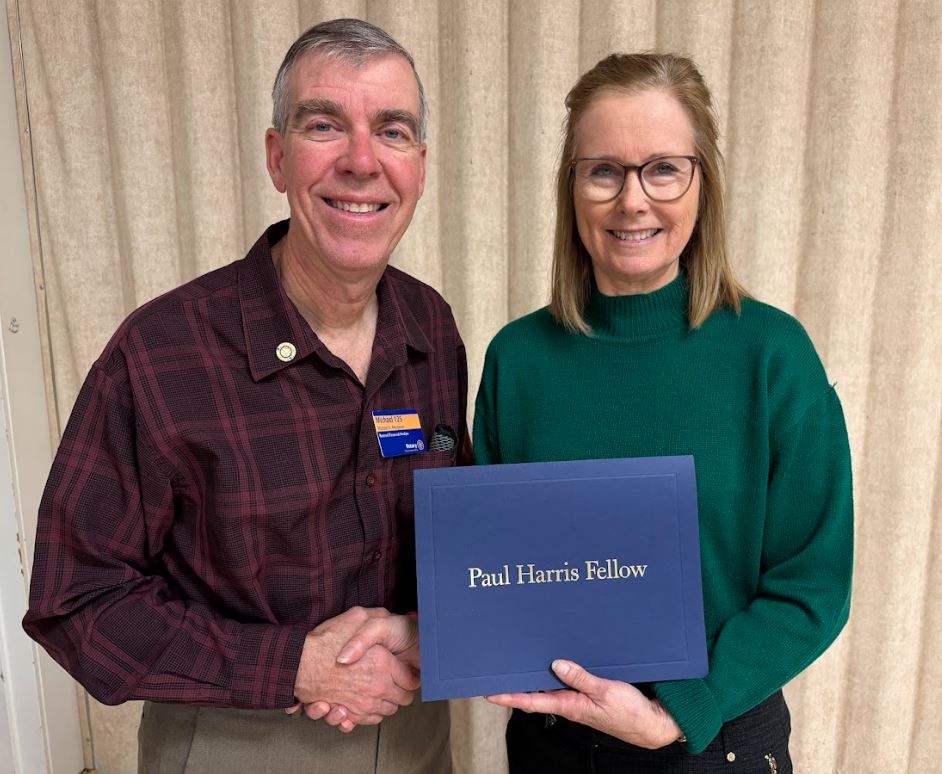
Executive director honored as Paul Harris Fellow

Revlan Hill, executive director of The Community Foundation of Harrisonburg and Rockingham, became a Rotary International Honorary Paul Harris Fellow in December 2024.

Revlan Hill, executive director of The Community Foundation of Harrisonburg and Rockingham, with nominator Michael Neupauer, secretary of Rotary Club of Harrisonburg, at the Dec. 16, 2024, meeting.

The recognition is among the organization’s highest honors, awarded to members and non-members “whose lives exemplify Rotary’s ideals of service, leadership, and positive influence on the world,” said Harrisonburg Rotary president Shannon Porter at the Dec. 16 regular meeting.

Hill was recognized for “her outstanding contributions and unwavering commitment to our community,” Porter said.

Hill joined the Community Foundation in 2006 and has been in the director’s role since 2013. The organization celebrated its 25th anniversary of philanthropic leadership last year — over the years, it has aided community benefactors in pouring more than $75 million back to area nonprofits.

The award honors Rotary founder Paul Harris, who with three colleagues in business, started the club in 1903. The fellowship began in 1957 to both express appreciation to significant community contributors and to help fund the club’s scholarship program enabling professionals to study peace and conflict resolution.

Looking to donate or volunteer? TCF’s Giving Back Guide 2024 is “the” resource

For those looking to donate or volunteer with Harrisonburg and Rockingham County nonprofits, look no further than the 2024-25 Giving Back Guide.

The newest edition, which was distributed in the Daily News-Record and at locations around the county in late November, is an annual publication of The Community Foundation of Harrisonburg and Rockingham.

The guide, also available online at TCF’s website, offers eligible 501(c)(3) organizations free publicity and the opportunity to share funding needs with prospective donors.

Copies are also distributed to the foundation’s Professional Partners in Philanthropy, other area financial advisors and those in wealth management services.

“Reading through this guide reminds us all that the smallest monetary gift can still make a difference,” said Senior Director of Grants and Scholarships Ann Siciliano. “We really try hard to get this resource into the hands of the many people in this community who value philanthropy and who are looking for ways to give back.”

The guides are also used throughout the year in the foundation office to inform  fundholders and those who call in with inquiries about local need.

View or download the online Giving Back Guide.

Find the guide at our office at 317 South Main Street in Harrisonburg, at Massanutten Regional Library locations in Harrisonburg and Rockingham County, the Daily News-Record office, and the Dayton Farmer’s Market.

Each one-page profile includes a brief history of the organization, a mission statement, contact information, and a specific project with line-item dollar amounts. Organizations can also list other funding needs.

The Giving Back Guide is an outgrowth of the foundation’s annual grants cycle, which opens from July 1-Sept. 1.

“This publication grew from the realization several years ago that organizations were doing a lot of work to fill out these applications and that the information they provided could be a valuable directory for the community,” Siciliano said. “We’re constantly adapting our processes to meet community needs, and are already making plans to simplify next year’s application process.”

Sixty-eight nonprofits are featured in the guide this year.

Community Grants award more than $159,600 to 14 area nonprofits


The Community Foundation of Harrisonburg and Rockingham announces that a total of $159,620 will be awarded to 14 area nonprofit organizations for the 2024 Community Grants cycle.

The organizations are focused on a range of areas, including arts and culture, health care, animal welfare, education, and mental health.

For more information, view 2024 project summaries.

More than 75 organizations submitted applications, said Ann Siciliano, senior director of grants and scholarships.

Grant awards are made by committees who meet to review applications and community need.

Grantee organizations will receive their funding by the end of the year and are required to file impact reports by late summer 2025. The next Community Grant cycle begins in the summer.


Fund Grantee Project and Award Amount
Earlynn J. Miller Fund for the Arts Arts Council of the Valley  2025 Arts For All

$45,239

Earlynn J. Miller Fund for the Arts Harrisonburg Dance Cooperative Sound paneling

$8,000

Earlynn J. Miller Fund for the Arts OASIS Fine Art & Craft Scholarship Program

$3,850

Earlynn J. Miller Fund for the Arts Shenandoah Valley Bach Festival  Event support

$7,500


Alvin V. Baird, Jr. Endowed Fund Adagio House Compassion Fund (free and reduced fee psychotherapy)

$5,000

Alvin V. Baird, Jr. Endowed Fund Family Life Resource Center Scholarship Fund (sliding fees to cover mental health sessions)

$ 2,935

Alvin V. Baird, Jr. Endowed Fund F.R.E.E. of Harrisonburg Mobility needs for low-income residents

$ 25,000


Alvin V. Baird, Jr. Endowed Fund Harrisonburg Community Health Center Infant bilirubin monitoring equipment

$ 16,100

Valley Arts & Culture Fund Silk Moth Stage Arts events

$ 1,400

Mary Spitzer Etter Endowed Fund

Valley Arts & Culture Fund

Any Given Child Shenandoah Valley Barefoot Puppet Theater performances for 1500+ second graders

$6,365 total

HR Food Pantry Endowment Corner Cupboard Food Pantry Babies to Boomers Program

$ 2,000

Sean Warner Memorial Fund Family Life Resource Center  Resources for play therapy and children’s waiting area

$ 1,097

Hildred Neff Memorial Fund Rockingham-Harrisonburg SPCA Community Cat Program

$ 11,695

Hildred Neff Memorial Fund Wildlife Center of Virginia Wildlife care (earmarked for local animals)

$ 11,695

Janet Sohn Endowed Fund Big Brothers Big Sisters Mentorship program

$ 13,220


Fifteen Highland County nonprofits awarded grants from Little Swiss Fund

The 2024 Little Swiss Fund grant awards will distribute a total of $553,629 to 15 nonprofit organizations serving Highland County.

The fund began in 2018 with a $10 million gift from an anonymous donor. Monies from the permanently endowed fund are annually invested and distributed to eligible 501 (c)(3) organizations through a competitive grant process managed by The Community Foundation of Harrisonburg and Rockingham.

Organizations must be physically located in Highland County, Va., and the project or program to be funded must serve the Highland County area. Religious organizations are welcome to apply. Nonprofit organizations must have annual revenues in excess of $25,000 to be eligible.

All grants will be awarded in late November 2024.

The next Little Swiss Grant cycle begins in the summer of 2025.

For more information, view 2024 project summaries.


Organization Project Award Amount
Allegheny-Blue Ridge Alliance James River Headwaters Protection  $12,000
Blue Grass Resource Center Highland Inn Revitalization Project $50,000
Bolar Volunteer Fire Department Water purification units for firehouse and turnout gear $15,000
Bolar Volunteer Rescue Squad Operating costs  

$11,379


Dare To Dream Therapeutic Horsemanship Center Operating costs $15,000
Elegius Mini Equine Sanctuary Operating costs $11,000
Highland Children’s House Operating costs $99,472


Highland County Arts Council Operating costs $20,000
Highland County Fair Association Operating costs $55,000
Highland County Humane Society, Inc. Pet Retention and Foster Care programs $35,000
Highland County Volunteer Fire Department New building at Blue Grass firehouse $30,000
Highland Historical Society Maple Museum Renovation; Staffing $15,000
Highland Medical Center Equipment Upgrades and Replacement $80,000
Highland Center Operating Costs $50,000
McDowell Volunteer Fire Department Self-Contained Breathing Apparatus equipment $54,788

Organizations must be tax-exempt public charities under IRS Section 501(c)3 or other nonprofit status. Organizations must be physically located in Highland County, Va., and the project or program to be funded must serve the Highland County area. Religious organizations are welcome to apply. Nonprofit organizations must have annual revenues in excess of $25,000 to be eligible. Local clubs (civic and otherwise), and recreational facilities are NOT eligible to apply.