Why the annual Form 990 filing is crucial to your nonprofit organization

Each month, TCF processes grant checks from our donors to area nonprofits. We review each organization’s 501(c)(3) status in an online database before mailing these checks and sometimes, we run into a problem.

Your organization’s tax-exempt status has been revoked because the required Form 990 has not been filed.

This means we cannot process the donation and must wait to send the donation until your organization’s status has been renewed. Sometimes our donors decide to give to a different organization because of this.

We know the IRS-required filings can be overwhelming, to say the least. There are so many different forms, and why are they all named by random numbers?

However, keeping up with these forms is crucial for your nonprofit organization to maintain its 501(c)(3) tax-exemption status, which impacts your eligibility for grants, but also for participation in TCF opportunities such as the Great Community Give, the Giving Back Guide, and our competitive grants (opening this summer for the 2025 cycle).

Here’s some more information on the Form 990.

  • Organizations with $200,000 or more in gross receipts or total assets of $500,000 or more must fill out a Form 990.
  • Organizations with gross receipts under $200,000 and total assets under $500,000 can fill out a 990-EZ, a shorter form of the 990.
  • Organizations with $50,000 or less in annual gross receipts can submit a Form 990-N, which can be filled out within minutes online.

Resources

IRS- Stay Exempt (video and written courses on maintaining 501(c)(3) status): https://www.stayexempt.irs.gov/home/existing-organizations/existing-organizations

IRS- Forms, instructions & publications (search engine to find forms like the 990, 8868, etc.): https://www.irs.gov/forms-instructions

IRS- Charities and nonprofits (home page of different resources for NPOs): https://www.irs.gov/charities-and-nonprofits

Giving in Times of Disaster: Tips for feeling good about your donation

Here’s a few tips summarized from the October WSVA radio show with Executive Director Revlan Hill.

1. Do your homework before you give.

“Learn a little bit about the organization. Who are the board members? What is that organization accomplishing? How many people are they serving? What are they doing with their money? What is their strategic plan? Do they have an audit? … Is there someone looking over their shoulder and scrutinizing the financing?”

2. Look for the ratio or percentage of expenditures and revenue on the organization’s tax returns (find these online). All 501(c)(3) organizations are required to file a tax return. Program expenses should be a minimum of 75%.

3. Larger organizations have more capacity and infrastructure.

“The larger organizations are already boots on the ground…many people are already helping. Red Cross is a $3 billion organization that employs 17,000 people…within 48 hours, Red Cross had opened 148 shelters and served almost 10,000 people.”

4. Disasters disrupt regularly scheduled blood drives in the affected areas.

“Those cancelled blood drives affect the supply nationwide. Giving blood is something we can all do.”

5. Be wary of phone solicitations, especially those asking for a donation quickly or on a deadline. Request the organization’s tax ID number (all nonprofits are issued a number, which means they’ve passed some stringent accountability tests), so that you can do some research before donating. Never give personal information over the phone.

6. Community foundations know the local needs – and can connect with other community foundations across the country.

“We are transparent. We don’t have a favorite nonprofit. Call us or set up an appointment with us. We know the needs of the community and we can help you with the research to find the right organization to give to.”

More Resources

Check out local community foundations in the areas hit the hardest. These organizations have access to community input and strong connections to civic and nonprofit leadership. Most mobilize quickly in times of disaster and are uniquely situation to determine where donations will make the most impact. After Hurricane Helene and Milton, here are three organizations with relief funds: The Community Foundation of Western North Carolina, the Community Foundation of Henderson County, and the Community Foundation Tampa Bay

Our “Dukes Support Mountaineers” fund, started by an area resident with our help, will go directly to Appalachian State University’s disaster relief efforts.

Organizations also mentioned in the radio show include Red Cross, Samaritan’s Purse, and Mennonite Disaster Services.


‘Dukes Support Mountaineers’ fund collecting donations for Appalachian State community

UPDATE 10/17/2025: The fund has raised a total of $63,150 for relief efforts.

Dukes Support Mountaineers, a new charitable fund opened this week by The Community Foundation of Harrisonburg and Rockingham, welcomes donations to support Appalachian State University’s disaster relief efforts. 

The fund was started by James Madison University alumni and patrons Joe and Debbie Showker, who reside in Rockingham County.  

**CLICK HERE TO MAKE A DONATION**

The university, the town of Boone, and surrounding Watauga County has been under a State of Emergency since Sept. 26. Floodwaters have ravaged many mountain communities, with many residents still isolated and experiencing power outages, challenges with communication and transportation.  

Showker says beyond the desire to help folks in need, there’s a strong connection between Harrisonburg, the home of James Madison University, and Appalachian State. The Mountaineers are SunBelt Conference peers and have a storied history as former FCS rivals.

The two universities share a common footprint — a central location in the heart of the county seat, thousands of employees who reside locally, and an historic regional outreach.  

“We are similar institutions with a very respectful, rich rival tradition in athletics, and we share the Blue Ridge mountains. We’re neighbors in so many ways,” Showker said. “When I saw what was happening there, I really felt compelled to try to pull something together to enable the JMU community, and anyone else who felt similarly, to show our support for what they’re going through.” 

In less than 24 hours since its opening, the fund has more than $5,000 in donations, said the foundation’s executive director, Revlan Hill. 

“We’re pleased to be able to provide donors who want to give with a safe and secure way to do that,” Hill said. “All of the funds will go directly into the university’s disaster relief efforts for students, faculty and staff in need in the Mountaineer community.”  

The foundation is encouraging online donations at this time rather than check or cash in order so that the funds can be quickly transferred, Hill said.  

Foundation staff are prepared to answer questions about other giving options to support North Carolina disaster relief efforts as well, she said. 


Making A Difference: Organizations Report Impact of 2023-24 Community Foundation Grants

From meals for the elderly to new downtown art, healthy pets and an insulated emergency shelter, 12 area nonprofits benefited from a total of $159,516 awarded from seven endowed funds managed by The Community Foundation of Harrisonburg and Rockingham.

Grant applications for the 2024-25 cycle are in the review process, with awardees to be announced in November.

A new safe floor for Harrisonburg Dance Cooperative

With a new “sprung subfloor” funded by a $17,814 grant from the Earlynn J. Miller Fund for the Arts, dancers at the Harrisonburg Dance Cooperative are reaching new heights. Since 2014, they’ve been dancing carefully on marble, wood, and concrete floors. But with the new surface, instructors have been able to incorporate jumps in movement training. This in turn has expanded class offerings and diversified performances. The cooperative can host workshops on injury prevention and bring in specialists like dance physical therapists to use the space for a safe dance practice. The floor has helped the company grow beyond its former numbers, and to open its doors to guest choreographers such as Beau Harman, a New York City-based artist who has worked with JMU dancers. “We are excited to see what this small-but-mighty space will continue to offer our community,” said cooperative partner Lara Mack.

Horses helping caregivers

Cross Keys Equine Therapy used their $10,000 award from the Alvin J. Baird Jr. Program Endowment to develop a curriculum for a special training program to equip parents, grandparents and other caregivers for recognition of and response to traumatic stress reactions in the children they are caring for. The organization hosted monthly groups that met five or six times, and plans to host another six-week group this fall. Feedback was positive and individual caregivers expressed gratitude for the information and the unique context of learning from and with horses.
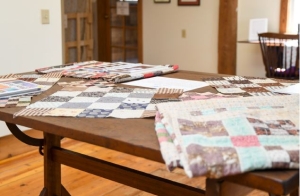
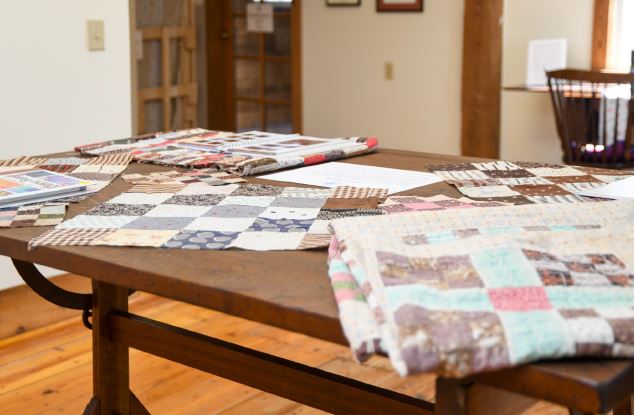
Virginia Quilt Museum invites visitors to a hands-on exhibit.

A multi-purpose space for quilt museum

The Virginia Quilt Museum invested almost $17,000 in Earlynn J. Miller funding to transform the lower level of the museum into a space for hands-on activities, classes and programs. The space also provides for artists and scholars-in-residence with a research center and a permanent exhibition. Wall repairs, drywall, painting, technology equipment, signage and furniture were among the expenses covered.

Ballet’s costumes remain pristine

Rockingham Ballet Theater fundraised for years to purchase new costumes for the annual production of “The Nutcracker.” A new climate-controlled space funded by a $875 grant from the Valley Arts & Culture Fund has helped extend the life of these expensive and beautiful gems, bringing years of pleasure to local dancers – and area audiences.

Meals on Wheels provides a month of fresh food for seniors

A Community Endowment Fund grant of $11,273 to Valley Program for Aging Services provided 935 meals for adults age 60 and older in Harrisonburg and Rockingham County, equal to one month of meals for 47 individuals.

Meals are prepared by A Bowl of Good using locally sourced fresh fruits and vegetables when available. Milk is purchased from Mt. Crawford Creamery. All meals meet one-third of the daily nutrition requirements for older adults. The balance of grant funding – approximately $4,200 –  helped with costs of other items: food trays, hot and cold insulated containers, delivery costs, staff time, and related expenses.

Blue Ridge Free Clinic sees increased need

Blue Ridge Free Clinic received $34,592 from the Alvin V. Baird, Jr. Program Endowment Fund, which benefits nonprofit organizations serving unmet healthcare needs among local populations. The grant aided the clinic in serving 611 individual patients with 1,400 medical appointments. For 356 patients, a social worker provided consultation and resource navigation. The grant helped to pay for a contracted social worker, transportation, facility maintenance, interpreters, medication and supplies.

Funds help treat wildlife

A staff member aids a box turtle at the Virginia Wildlife Center.

About 12 percent of the sick, injured, and orphaned wildlife treated at the Wildlife Center of Virginia in Waynesboro come from Harrisonburg and Rockingham County. Nearly 900 animals were treated thanks to 2023 funding, more than $11,700 from the Hildred Neff Memorial Fund.

The Center’s treatment averages $179 per patient [2023 treatment costs]. This includes salaries and benefits for the wildlife medical care team, including veterinarians, licensed veterinary technicians, and wildlife rehabilitators, as well as food, medicine, medical and laboratory supplies, equipment costs, and more.

Saving one (of nine) lives

Cat’s Cradle staff heard plenty of thanks from the 250 cat owners aided in covering veterinary bills with $5,700 from the Hildred Neff Memorial Fund. In response to community need, the organization has expanded its pet retention program for clients needing financial assistance. The program funds veterinary bills and short-term costs of medical supplies to keep pets healthy and with their families rather than in the local public shelter. 

Anicira helps area pets

Mavin, Charlie, Toby and their owners will be forever grateful for Anicira’s Operation Free Pet Healthcare. Maven survived a life-threatening urinary blockage, Charlie endured surgery to remove a painful mass, and Toby had a major dental procedure. These are just a few of the dogs and cats aided by the Hildred Neff Memorial Fund, which supports agencies providing for the needs of domestic and wild animals. The $5,727 grant provided medical, surgical, and dental care to 80 pets, resulting in saved lives, reduced suffering, and the preservation of the bond between families and their beloved pets.

Emergency shelter protected from temperature change

The Salvation Army’s 28-bed emergency shelter needed an upgrade to the skirting and an access opening – to the tune of more than $13,000. The work was the final task left over from a successful 2022 renovation.

The Janet Sohn Endowed Fund, which awards funds to organizations that Janet supported during her lifetime, helped fund the work. In 2022, the shelter served 310 individuals and family members with basic and intensive case management, access to health and nutritional programs, and other community connections.
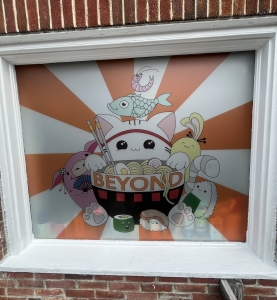
Artist Gemma Amendola’s window decal brightens West Water Street.

Three new installations and children’s “wild” paintings brighten downtown

Oasis Fine Art & Craft utilized an award from the Valley Arts & Culture Fund to fund three different projects. Local artist Gemma Amendola designed a window decal and banner for Beyond Restaurant. Oasis also framed two community mosaics, one constructed at the Farmer’s Market and a second mosaic featuring a family of ducks located on Water Street.

More than 300 area elementary students “captured” wild and wonderful animals in paint during a series of workshops. Oasis artists led the sessions, where children were taught the elements of line, shape, color and texture, and then practiced drawing real or imagined animals. Forty artworks were selected for an exhibit at Massanutten Regional Library. Funding from the Earlynn J. Miller Fund for the Arts helped with the purchase of supplies, printing and the exhibit installation. The Explore More Discovery Museum hosted the field trips, and the project also involved Any Given Child Shenandoah Valley.

Making the arts accessible through events and a new website

Nearly $21,000 from the Earlynn J. Miller Fund for the Arts, honoring the late dance professor, helped Arts Council of the Valley increase opportunities for local residents to enjoy, learn and experience the arts.

Building on the first year’s success of the community theater program ACT ONE, Arts Council of the Valley has expanded exploration of the performing and visual arts through the addition of free master classes for adults, providing welcoming, low-stress introductions for individuals who may not have outlets for artistic expression. Master classes for adults have drawn 115 participants to eight sessions.

Thirty scholarships of $299 each helped economically disadvantaged students attend summer theater camps, with each camp ending in a performance showcase.

Day of the Arts, on May 4, 2024, celebrated the vital role performing and visual arts play in our community, with some 950 people attending. The $6,000 grant supported workshops, lectures, performances, art materials; and the work of an exhibition curator.

The organization is undergoing a new website design, slated for a fall 2024 launch. Much of the work has been donated by local branding, web and marketing agency Estland, with the remainder of the costs financed through a grant from the Mary Spitzer Etter Endowed Fund. The new site will be “fresh, engaging, easy to navigate, and fully ADA-compliant,” says ACV Executive Director Jenny Burden. “The website will provide a more accessible, positive experience for online visitors, making it easier for them to connect with arts opportunities.”

 

Rebuild! VA


The Rebuild VA Grant Fund is a program to help small businesses and non-profits whose normal operations were disrupted by COVID-19, including restaurants, brick and mortar retail, exercise and fitness facilities, personal care and personal grooming services, entertainment and public amusement establishments, and campgrounds.

Businesses and non-profits that are approved for a Rebuild VA grant may receive up to 3 times their average monthly eligible expenses up to a maximum of $10,000.

THE APPLICATION WILL BE AVAILABLE STARTING ON AUGUST 10, 2020

Who is eligible for the grant?

Applicants must meet the following eligibility criteria:

  1. The business or non-profit must be organized as one of the following:
    • Corporation (C-Corp), pass through entity (S-Corp, Partnership, LLC) , or other legal entity that is organized separately from the owner;
    • A 501(c)(3) organization or 501(c)(19) veterans organization;
    • A sole proprietorship; or
    • An independent contractor.
  2. The business or non-profit must also fall within one of the following businesses categories:
    • Restaurant and Beverage Services
      Restaurants, dining establishments, food courts, breweries, microbreweries, cideries, distilleries, wineries, tasting rooms, and farmers markets (or vendors within the farmers market)
    • Non-essential Brick and Mortar Retail
      Non-essential brick and mortar retail establishments include everything EXCEPT the following:

      • Grocery stores, pharmacies, and other retailers that sell food and beverage products or pharmacy products, including dollar stores, and department stores with grocery or pharmacy operations;
      • Medical, laboratory, and vision supply retailers;
      • Electronic retailers that sell or service cell phones, computers, tablets, and other communications technology;
      • Automotive parts, accessories, and tire retailers as well as automotive repair facilities;
      • Home improvement, hardware, building material, and building supply retailers;
      • Lawn and garden equipment retailers;
      • Beer, wine, and liquor stores;
      • Retail functions of gas stations and convenience stores;
      • Retail located within healthcare facilities;
      • Banks and other financial institutions with retail functions;
      • Pet and feed stores;
      • Printing and office supply stores; and
      • Laundromats and dry cleaners.
    • Fitness and Exercise Facilities
      Fitness centers, gymnasiums, recreation centers, swimming pools, indoor sports facilities, and indoor exercise facilities
    • Personal Care and Personal Grooming Services
      Beauty salons, barbershops, spas, massage practices, tanning salons, tattoo shops, and any other location where personal care or personal grooming services are performed
    • Entertainment and Public Amusement
      Theaters, performing arts centers, concert venues, museums, racetracks, historic horse racing facilities, bowling alleys, skating rinks, arcades, amusement parks, trampoline parks, fairs, arts and craft facilities, aquariums, zoos, escape rooms, indoor shooting ranges, public and private social clubs
    • Private Campgrounds and Overnight Summer Camps
  3. The business or non-profit must meet the following additional eligibility criteria:
    • Principal Place of Business is in Virginia
    • 25 or fewer employees
    • Gross revenue of less than $1.5 million in the last fiscal year
    • Operating prior to March 12, 2020
    • Currently in good standing with the Virginia State Corporation Commission
    • The applicant must engage in legal activity

The following applicants are ineligible for the Rebuild VA grant funds:

  • Applicants that are not individually owned and operated
  • Applicants that have already received CARES Act funding from any federal, state, regional or local agency or authority
  • Applicants that are delinquent on Virginia state income taxes and do not have a payment plan in place
  • Applicants that are lobbyists
  • An applicant, owner, or a principal of the business with 20 percent or greater ownership interest is more than sixty (60) days delinquent on child support obligations

Watch this video to learn more about how about Rebuild! VA.

The Rebuild VA grant will aid businesses whose normal operations were disrupted due to the COVID-19 pandemic. The statewide program is capitalized with $70 million dollars, which will allow for assistance for approximately 7,000 applicants. These sessions will go over the eligibility requirements and documentation needed to apply when the application opens on August 10th.

Register for one of these webinars: How to Apply
– July 31st 12:00 noon
– Aug 4th 9:00 am
– Aug 4th 5:30 pm